

Sangle d'arrimage à cliquet pour rail E de 2 po
Cat:E piste à cliquet
La conception ingénieuse du raccord E Track facilite la fixation et le détachement de la sangle. Faites simplement glisser le raccord E Track dans l...
Voir les détails

+86 139 5782 7340

Ratchet straps should be tightened until the cargo is firmly immobilised with no perceptible movement, but not so tight that the webbing digs into soft goods, distorts the load, or exceeds the working load limit (WLL) marked on the strap. In practical terms, a correctly tensioned strap will feel taut and resist being pulled away from the load by hand, while the webbing itself shows no twisting, bunching, or cutting into surfaces. For most freight and trailer applications, a tension of approximately 30–50% of the strap's WLL is sufficient to hold cargo securely under typical road vibration and braking forces.
Getting strap tension right is not just a matter of feel — it has direct implications for cargo safety, legal compliance, and the long-term condition of both the load and the strapping equipment. Whether you are using heavy duty ratchet tie down straps for flatbed freight or lighter tie-downs for a utility trailer, the principles are the same: match the strap to the load, apply even tension, and inspect before every trip.
Every commercial grade ratchet strap carries two critical ratings printed on its label or woven into the webbing: the Working Load Limit (WLL) and the Break Strength. These numbers are not interchangeable, and confusing them is one of the most common and dangerous mistakes in cargo securing.
In practice, for a strap with a break strength of 10,000 lbs, the WLL is approximately 3,333 lbs. Operating at or near the WLL on every trip accelerates wear and fatigue in both the webbing fibres and the ratchet mechanism. For routine cargo work, applying 30–50% of WLL as working tension extends strap service life considerably while still providing adequate restraint under normal road conditions.
WLL vs Break Strength by Strap Width (lbs)
The chart illustrates the 3:1 safety factor built into the WLL across all standard strap widths — the break strength is always three times the working load limit. A 2" industrial ratchet tie down strap with a 15,000 lb break strength carries a WLL of approximately 5,000 lbs, meaning you should size your strap selection for the total cargo weight plus dynamic forces, not just static weight. Selecting the correct strap width is the first step toward safe and legal cargo restraint; using a 1" strap on a load that requires a 2" strap is a common field error with serious consequences.
Applying correct tension is a repeatable skill. Following a consistent procedure every time reduces variability between operators and ensures the load arrives safely regardless of who secured it. This procedure applies to professional ratchet tie down systems used on flatbeds, utility trailers, and enclosed trailers alike.
Re-check tension after the first 15–20 minutes of travel. Cargo often settles slightly as it responds to road vibration, and this initial settling can cause apparent slack in the straps. Stopping to re-tension after the first short leg is standard practice among professional transport operators.
Both extremes of tension create problems, though they manifest differently and affect different aspects of the transport operation. Understanding both failure modes helps you calibrate your practice and recognise warning signs before a load shifts or a strap fails.
Applying excessive tension beyond what the cargo and strap rating require causes several distinct problems. Soft goods such as cardboard boxes, wrapped pallets, and plastic containers can be crushed, distorted, or have their surfaces permanently marked by webbing indentation. Machinery and fabricated steel components can be distorted if straps are routed over unsupported spans of thin sheet metal at very high tension.
From a strap perspective, over-tightening accelerates fatigue in the webbing fibres, particularly at points where the webbing bends over hooks or anchor points. Repeated over-tensioning causes micro-fractures in the polyester fibres that are invisible to the naked eye but measurably reduce break strength over time. A strap that has been regularly over-tensioned may retain its appearance while having lost 20–30% of its original break strength.
An insufficiently tensioned strap allows cargo to shift during transit. Even minor movement — a few inches of lateral displacement — can change the load's centre of gravity enough to affect vehicle handling, particularly on trailers. In more severe cases, load shift leads to trailer sway, partial unloading of the load onto the road, or complete loss of cargo. Legal liability for cargo that falls from a vehicle is significant in most jurisdictions, with fines and civil liability extending to both the driver and the cargo owner.
Under-tightening also allows the webbing to vibrate and flutter at highway speeds, causing abrasion against the cargo surface and the trailer structure that rapidly degrades both the strap and the load's packaging or finish.
Tension Level Impact Comparison (Score /10)
Correct tension dominates all six performance dimensions, confirming that neither extreme serves the operator's interests. Over-tightening scores poorly on strap longevity and load integrity — key concerns when transporting finished goods or using best ratchet straps for equipment transport on sensitive machinery. Under-tightening scores near-zero on cargo safety and compliance, the two dimensions that carry the most serious legal and operational consequences. The radar chart reinforces the practical rule: tighten until the cargo cannot move, then stop.
Not all heavy duty ratchet tie down straps are appropriate for every task. Selecting the correct strap involves matching the strap's WLL and webbing width to the cargo weight and transport method. The table below provides a practical reference for common applications.
| Application | Recommended Width | Min. WLL | Min. Straps | Notes |
|---|---|---|---|---|
| Utility trailer / general cargo | 1.5" – 2" | 1,500 lbs | 2–4 | Use edge protectors on sharp corners |
| Flatbed trailer / lumber / steel | 2" – 3" | 3,000 lbs | 4–6 | Distribute evenly along load length |
| Heavy equipment / machinery | 3" – 4" | 5,400 lbs | 4–8 | Chock wheels; use wheel nets where applicable |
| ATVs / motorcycles | 1" – 1.5" | 1,000 lbs | 4 | Compress suspension slightly; protect painted surfaces |
| Palletised goods / enclosed trailer | 2" | 2,000 lbs | 2 per pallet | Use with load bars for lateral restraint |
For best ratchet tie down straps for flatbed trailers, the general industry rule is that the combined WLL of all straps securing a load must equal at least half the total weight of the cargo. So a 20,000 lb flatbed load requires straps with a combined WLL of at least 10,000 lbs — achievable with four 2,500 lb WLL straps positioned symmetrically along the load.
A common misconception is that strap tension only needs to counteract the static weight of the cargo. In reality, cargo experiences dynamic forces during transport that can briefly multiply its effective weight by a factor of 0.5–1.0g or more depending on the road surface and driving conditions. These dynamic loads are the true design case for flatbed ratchet tie down straps and all other cargo restraint systems.
The FMCSA (Federal Motor Carrier Safety Administration) cargo securement rules in the United States require that tie-down systems must resist forces of 0.8g forward, 0.5g rearward, and 0.5g laterally. This means a 1,000 lb cargo item must be restrained against up to 800 lbs of forward force during hard braking — a force that a single 1" strap with 1,000 lb WLL addresses with very little margin.
Effective Cargo Force (lbs) at Different Braking Intensities — 1,000 lb Load
At the FMCSA-mandated 0.8g forward deceleration standard, a 1,000 lb cargo item generates 800 lbs of effective forward force — meaning straps must collectively resist near the full static weight of the load just from braking alone, before adding lateral and rearward forces. This demonstrates why sizing straps based on cargo weight with no dynamic margin is inadequate, and why the best ratchet tie down straps for trailers are always rated comfortably above the calculated static requirement. At 1.0g (emergency braking or collision), the force equals the full static weight — a scenario that underscores the importance of using enough straps with sufficient combined WLL.
Following a structured ratchet strap maintenance guide is as important as correct tensioning. A strap that appears intact may have hidden degradation that causes it to fail at a fraction of its rated load. Industry data suggests that up to 40% of cargo securing failures involve straps that showed no obvious external damage before use — highlighting the importance of systematic inspection rather than visual spot-checking.
Primary Causes of Ratchet Strap Failure in Field Use (%)
Webbing abrasion and cuts account for nearly a third of all strap failures, making edge protection and correct routing the highest-priority maintenance habits for operators using best ratchet straps for equipment transport or any high-value cargo. Hook deformation is the second most common failure mode and is almost always the result of shock loading — either from an incorrectly secured load shifting suddenly, or from using a hook as a lifting point. Ratchet pawl slippage, while accounting for only 15% of failures, is particularly dangerous because it typically occurs under load, releasing tension suddenly rather than giving prior warning.
With a wide range of products available for cargo control, distinguishing between commodity-grade straps and commercial grade ratchet straps built for sustained professional use comes down to a few key specification and quality indicators.
Ningbo Easy Lifting specialises in stainless steel centre buckles, ratchet tie-down series, cam buckles, hooks, and webbing slings, with a product range that complies with GS and EC standards. As a professional OEM manufacturer, they also accommodate custom specifications for operators with specific WLL, hook type, or webbing length requirements.
Q1: How tight should ratchet straps be?
Ratchet straps should be tight enough that the cargo cannot shift when pushed firmly by hand, with the webbing lying flat and taut. As a guideline, apply 30–50% of the strap's WLL for general cargo. Stop tightening if the webbing starts to crease or the ratchet becomes very hard to operate.
Q2: How many ratchet straps do I need for a load?
The combined WLL of all straps must equal at least 50% of the total cargo weight under FMCSA rules. For a 2,000 lb load, you need straps with a combined WLL of at least 1,000 lbs — but using more straps at lower individual tension spreads the load more evenly and is safer in practice.
Q3: Can you over-tighten a ratchet strap?
Yes. Over-tightening crushes soft cargo, distorts sheet metal on vehicles and machinery, and accelerates webbing fatigue. A strap regularly tensioned near its break strength may lose 20–30% of its rated capacity without visible damage. Tighten until the cargo is immobilised, then stop.
Q4: How often should ratchet straps be replaced?
Replace straps when they show visible webbing damage (cuts, abrasions deeper than 10% of thickness), UV bleaching with brittleness, hook deformation, or any ratchet slippage under load. For commercial operators, a maximum service life of 2–3 years is a common policy regardless of visible condition.
Q5: What is the best ratchet strap for a flatbed trailer?
For flatbed applications, 2"–3" wide straps with a WLL of 3,000–5,400 lbs and flat hook or wire hook ends are most versatile. Look for GS or EN 12195-2 certification, heavy-gauge zinc ratchet hardware, and high-tenacity polyester webbing at least 27mm in width for strength and durability over long hauls.
Q6: Do ratchet straps loosen during transit?
Yes, cargo typically settles in the first 15–20 minutes of travel due to road vibration, causing apparent slack in the straps. Always stop after the first short leg to re-check and re-tension. On long hauls, re-inspect at each rest stop or every 150–200 miles as a standard practice.
Q7: How do I release a ratchet strap that is very tight?
Lift the release lever fully until the ratchet is flat open and the pawl clears all teeth. If the strap is under very high tension, the lever may require firm pressure — use steady force, not jerking. Once open, pull the webbing free from the mandrel. Never cut a strap under full load tension.
Q8: Are ratchet straps suitable for all cargo types?
Ratchet straps suit most rigid and semi-rigid cargo. For very soft or delicate surfaces, use rubber-backed straps or foam padding to prevent marking. For liquids or loose bulk materials in open containers, ratchet straps alone are insufficient — combine with nets, boards, and appropriate containment.
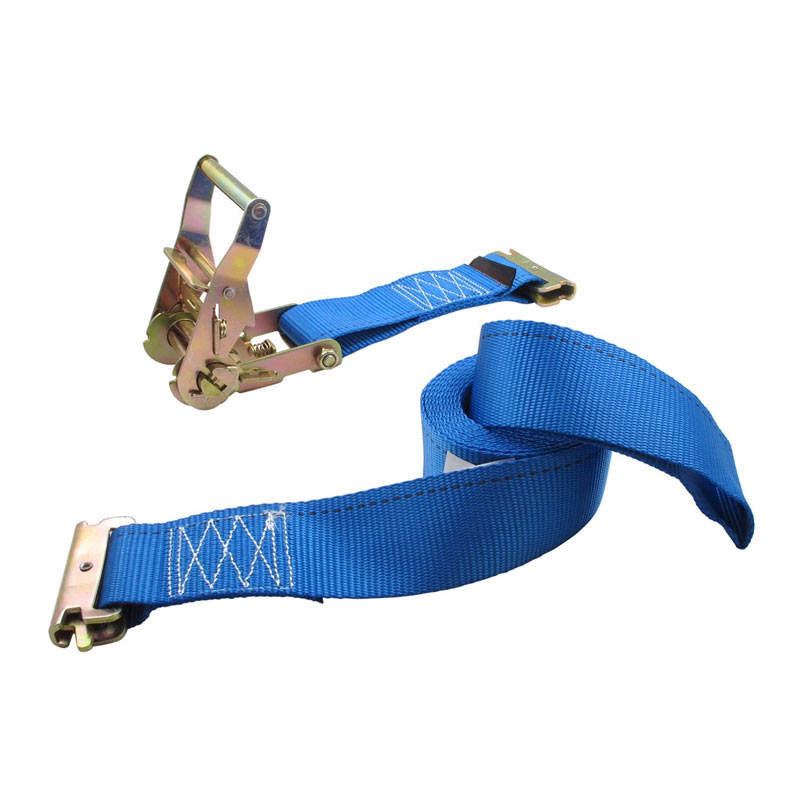
La conception ingénieuse du raccord E Track facilite la fixation et le détachement de la sangle. Faites simplement glisser le raccord E Track dans l...
Voir les détails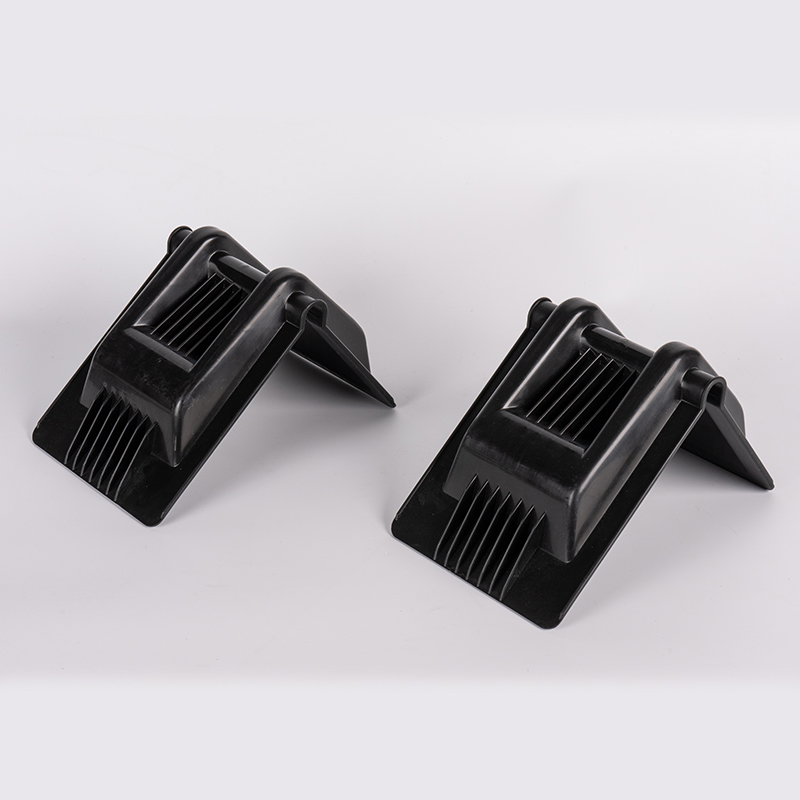
Protégez vos marchandises des dommages pendant le transport ! Nos protections d'angle en plastique Guard Cargo de 6 pouces sont votre choix pou...
Voir les détails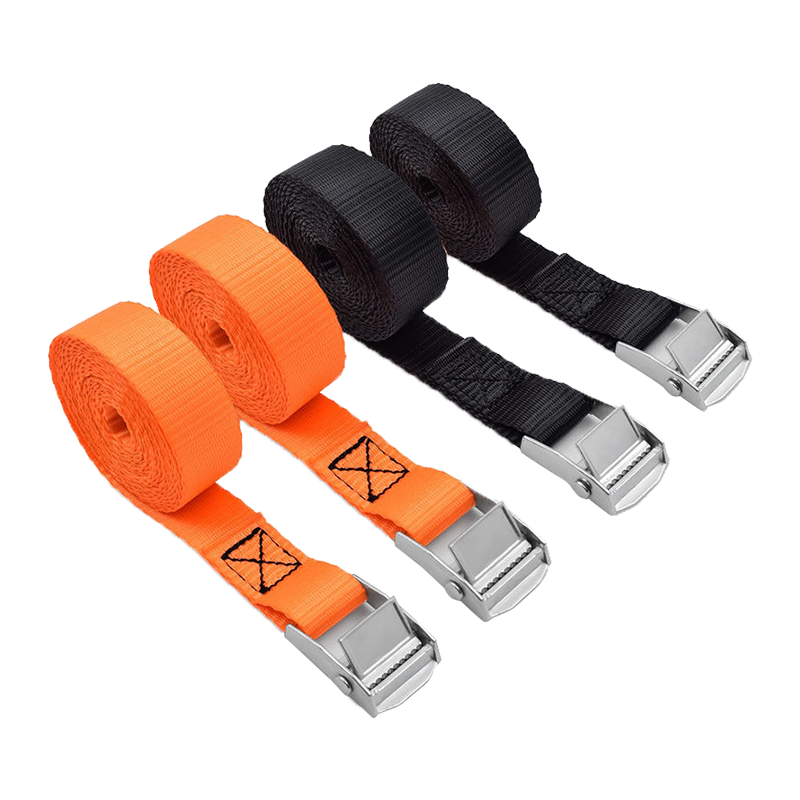
Longueur réglable : avec une longueur de 12 pieds, notre sangle offre une flexibilité pour s'adapter à différentes tailles de chargement. Ajust...
Voir les détails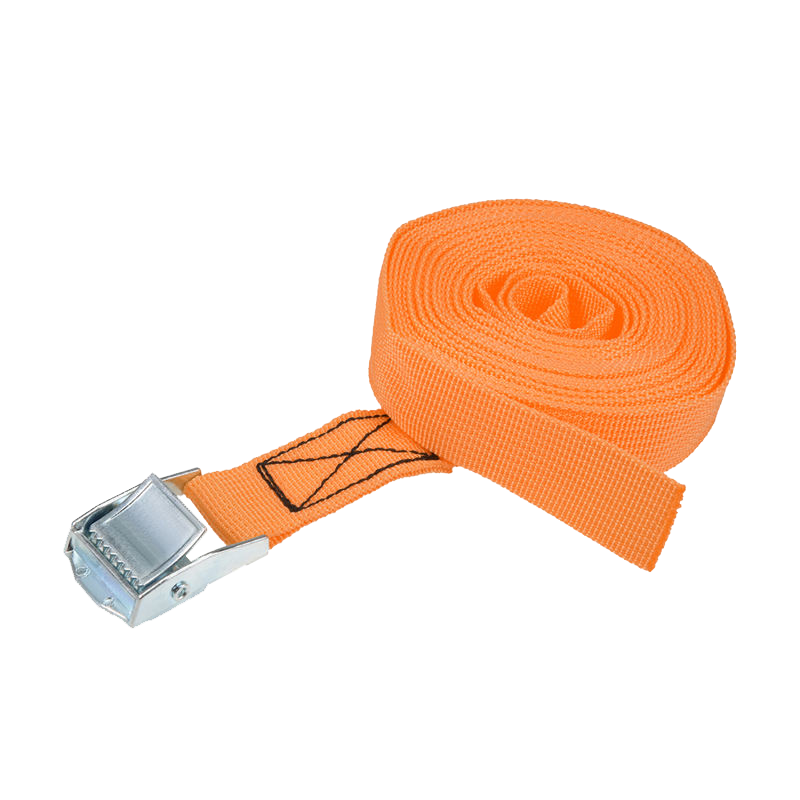
Construction robuste : fabriquée en alliage de zinc de haute qualité, notre sangle d'arrimage à boucle à came est conçue pour résister à de lou...
Voir les détails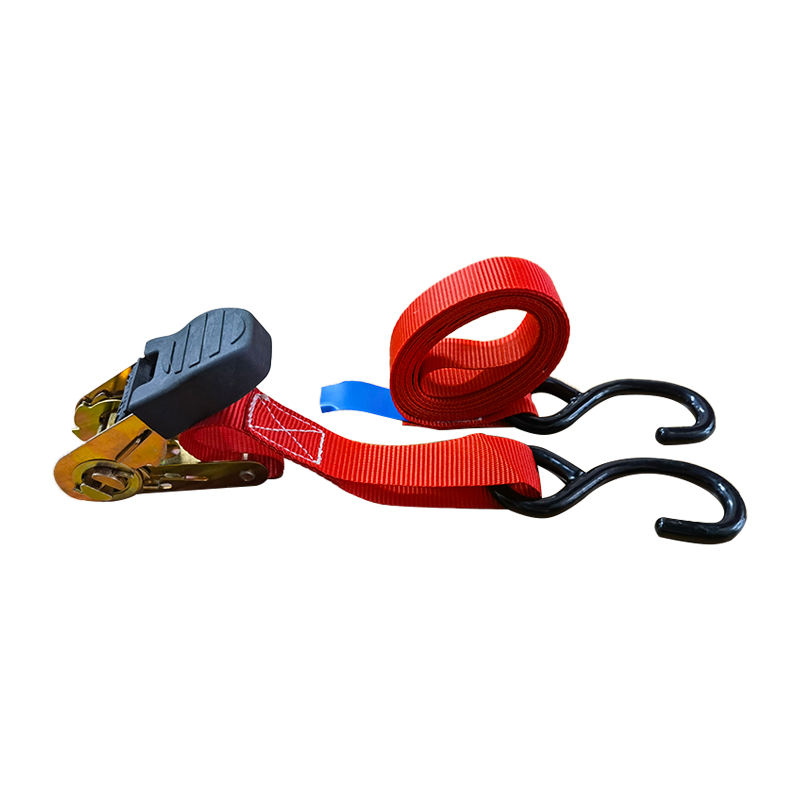
Fabriquée à partir de sangles en polyester de haute qualité et de boucles à cliquet robustes en acier ou en plastique, notre sangle à cliquet de 1" ...
Voir les détails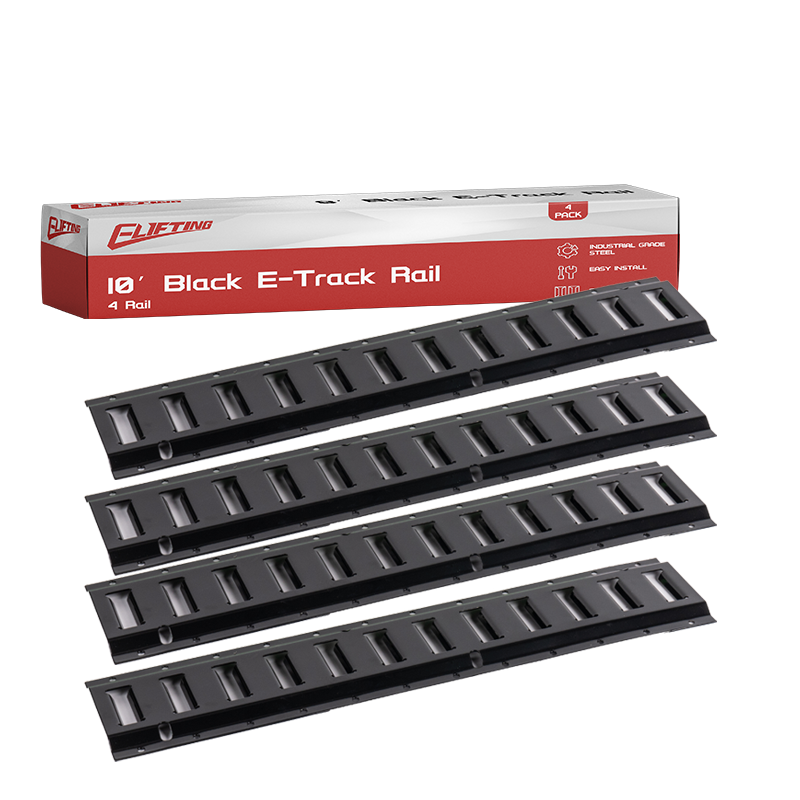
E-Track Rails est un système ferroviaire permettant de sécuriser les marchandises. Il se compose d'une série de rails en alliage d'alumini...
Voir les détails
Village de Shangcheng, ville de Tangxi, Ningbo, Zhejiang, Chine
+86 139 5782 7340
Copyright © Ningbo Easy Lifting Auto Accessories Co., Ltd.
